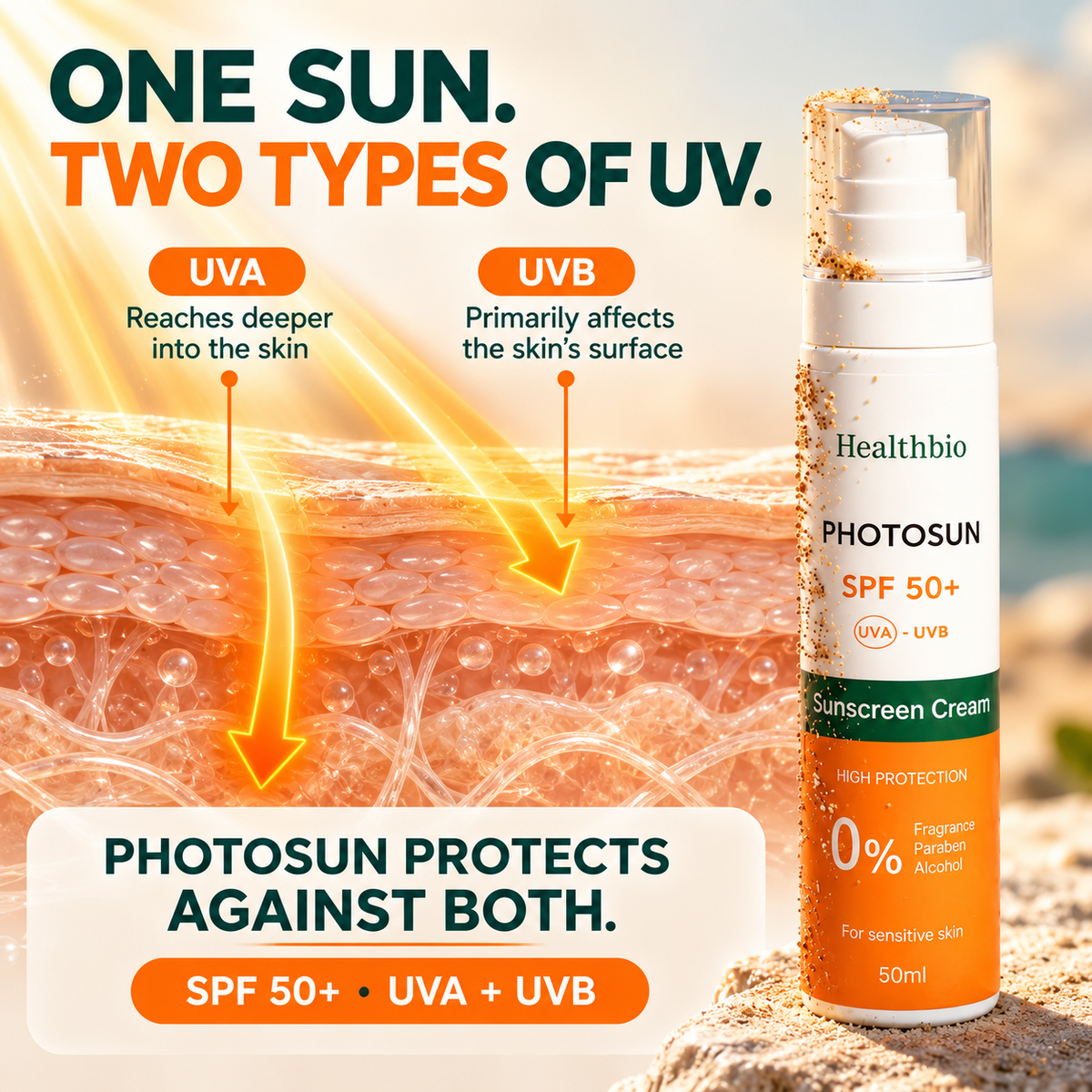
High protection, low drama. No fragrance, no alcohol — so there’s nothing to put you off wearing it tomorrow.
Texture is personal, and a sunscreen you dislike is a sunscreen you won’t wear. Try it, and if it isn’t for you we’ll refund it — opened bottle included.
“I’m just bad at remembering it.”
You remembered. You just didn’t want to.
Alcohol dries and stings around the eyes. Fragrance is the most common irritant in the category. Heavy textures pill under anything you put on top.
Nobody decides to under-apply. You just use the amount that feels tolerable — which for most people is a third of what the bottle was tested with.
Protection doesn’t scale politely. Use a fraction of the tested amount and you get a fraction of the number on the front — so you catch colour anyway.
“Sunscreen doesn’t really work on me.” The bottle moves to the back of a drawer, and the whole thing starts again next May.
Which is why this page spends more time on fragrance, alcohol and texture than on the number 50.
The best SPF 50 is the one still on your face at four in the afternoon.
The only test that countsThe number on the front of every sunscreen measures one kind of ultraviolet. The other kind is the one that reaches your skin on a grey Tuesday in February, through a window, while you’re indoors.
Roughly steady all year and all day. It passes through cloud and through ordinary window glass, and it reaches the deeper layers of the skin — which is why it’s the one associated with long-term photo-ageing rather than with burning.
Strongest in summer and around the middle of the day, and largely stopped by glass. It acts closer to the surface and it’s what turns you pink. This is the one the SPF number on the bottle is actually measuring.
A high SPF with no UVA protection lets you sit out far longer without turning pink — while the half you can’t feel carries on. Photosun is marked for both, which is the point of checking for it on any sunscreen you buy.

A desk beside a window is a UVA exposure, every working day, for years. It is also the single most common reason people treat sunscreen as holiday equipment rather than a daily step.
UVA is reaching your skin whenever there is daylight — through cloud, through glass, in February as well as July.
Roughly the amount sunscreen is tested with. Use a third of it and the number on the bottle stops describing what you’re getting.
Fragrance, alcohol and parabens. The three things most likely to make a daily SPF unpleasant enough to abandon.
Squeeze a line of cream along the full length of your index and middle fingers. That’s one application for a face and neck — and for most people it looks like far too much the first time they measure it.
This is also the honest reason a 50ml bottle doesn’t last forever. Used at the amount it was tested at, it’s roughly six weeks of daily use. A bottle that lasts you a year is a bottle you were never really wearing.
Every removal here is aimed at the same thing — taking away the reasons people give up on a daily SPF.
Fragrance is the most common cause of irritation in skincare, and in a product you wear on your face every day it buys you nothing at all.
Alcohol is what makes many light sunscreens feel fast-drying — and what makes them sting around the eyes and tighten skin by midday.
Not because parabens are the villain they’re often painted as, but because leaving them out removes a hesitation for people who’d rather avoid them.
High protection is only useful if your skin tolerates it. This is built for people whose skin tends to object.
Forehead, nose and cheeks get done automatically. These are the places that quietly accumulate years of sun because nobody thinks of them as part of the routine.
The backs of the hands are the one people regret. They’re exposed every time you drive, and almost nobody includes them.

Two finger-lengths for face and neck. Dispense it all before you start, so you can’t quietly use less.

Dot across the face, then press and smooth outward. Apply after moisturiser and before makeup, and give it two minutes to settle.

Ears, neck, hairline, hands. It takes about eight extra seconds and it’s where the regret lives.
Every two hours while you’re out in it, and again after swimming, sweating or towelling off. A morning application does not hold until evening — no sunscreen at any SPF does, and anyone who tells you otherwise is selling.
Four ways people get SPF onto their face. This one is built for daily use, which means it is deliberately not the right bottle for a day on the water.
| Photosun SPF 50+ |
Foundation with SPF |
Day cream with SPF 15–30 |
Beach sunscreen |
|
|---|---|---|---|---|
| Reaches its labelled SPF at a realistic amount | Yes | No | Rarely | Yes |
| Covers UVA as well as UVB | UVA + UVB | Varies | Varies | Usually |
| Free of fragrance and alcohol | Yes | Rarely | Varies | Rarely |
| Pleasant enough to wear every single day | Yes | Yes | Yes | Rarely |
| Right for a long day in open sun or water | Reapply often | No | No | Yes |
| Sized for the face rather than the body | 50ml | — | Yes | No |
For a full day at the beach, buy a large body sunscreen and use this on your face. Two different jobs, two different bottles.
The texture isn’t for you. It sits differently than you’d like under makeup, or it’s heavier than the one you’re used to. You tell us and we refund it, opened. You’ve lost nothing except the week it took to find out — and you still know more about what you want from an SPF than you did before.
Nothing stings. Nothing smells. It goes on last thing in the morning and you stop thinking about it — which is the entire objective. Ten years from now the difference between wearing SPF daily and wearing it on holidays is the kind of thing you can see in a photograph.
$33.90 each · free US shipping · refund if it isn’t for you

SPF 50+ against UVA and UVB, with nothing in it designed to put you off wearing it tomorrow morning.
Free US shipping · ships in 1–2 business days · refund if it isn’t for you
